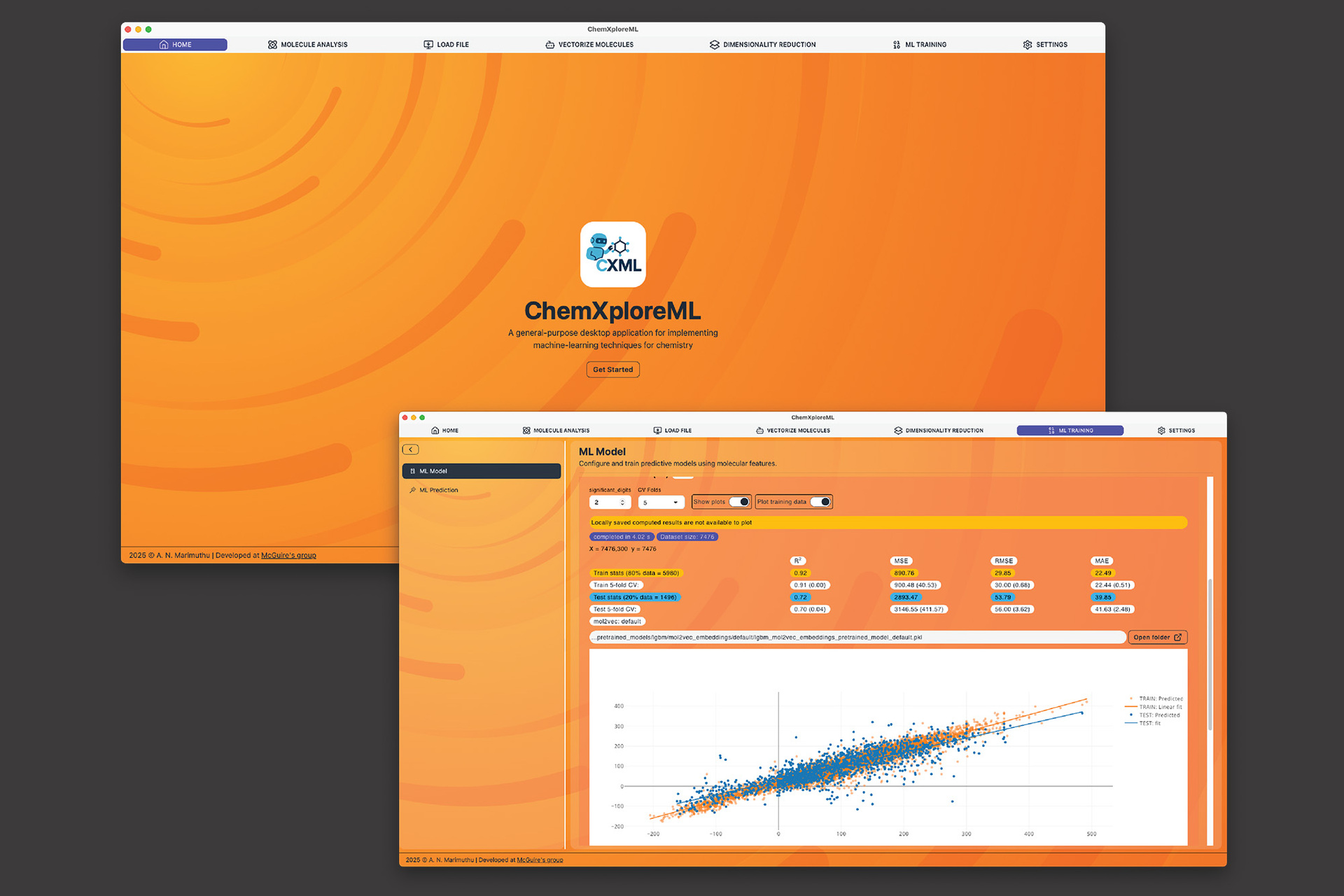
One of the shared, fundamental goals of most chemistry researchers is the need to predict a molecule's properties, such as its boiling or melting point. Once researchers can pinpoint that prediction, they're able to move forward with their work yielding discoveries that lead to medicines, materials, and more. Historically, however, the traditional methods of unveiling these predictions are associated with a significant cost ' expending time and wear and tear on equipment, in addition to funds. Enter a branch of artificial intelligence known as machine learning (ML). ML has lessened the burden of molecule property prediction to a degree, but the advanced tools that most effectively expedite the process ' by learning from existing data to make rapid predictions for new molecules ' require the user to have a significant level of programming expertise. This creates an accessibility barrier for many chemists, who may not have the significant computational proficiency required to navigate...
learn more